Bronchitis
What is Bronchitis?
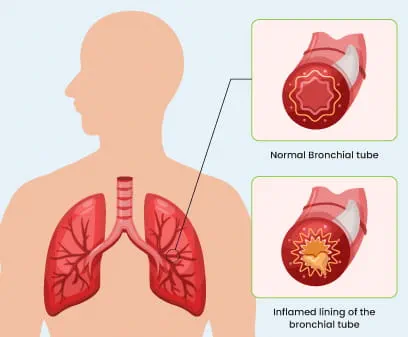
- Bronchitis is inflammation of the bronchial tubes (airways that carry air to and from the lungs).
- It leads to cough and mucus production due to irritated and swollen airways.
- Acute bronchitis – short-term (often follows a cold)
- Chronic bronchitis – long-term condition, part of COPD
Causes of Bronchitis
- Viral infections (most common, e.g., cold or flu viruses)
- Bacterial infections (less common)
- Smoking and air pollution (major cause of chronic bronchitis)
- Exposure to dust, chemicals, or irritants
Symptoms of Bronchitis
- Persistent cough (may last weeks)
- Mucus (sputum) production
- Shortness of breath and wheezing
- Fatigue and chest discomfort
- Mild fever, sore throat, body aches
Types of Bronchitis
- Acute Bronchitis
- Short-term, usually viral
- Improves within 1–3 weeks
- Chronic Bronchitis
- Productive cough for ≥3 months/year for 2 years
- Long-term and requires medical care
Diagnosis of Bronchitis
- Physical exam (listening to lungs)
- Chest X-ray to rule out pneumonia
- Sputum tests
- Pulmonary function test (spirometry)
Treatment of Bronchitis
- Most acute cases resolve without treatment.
- Supportive care: Rest and hydration, Cough medicines or inhalers (if needed)
- Antibiotics only if bacterial infection suspected.
- Chronic cases: Pulmonary rehabilitation, Oxygen therapy (severe cases)
