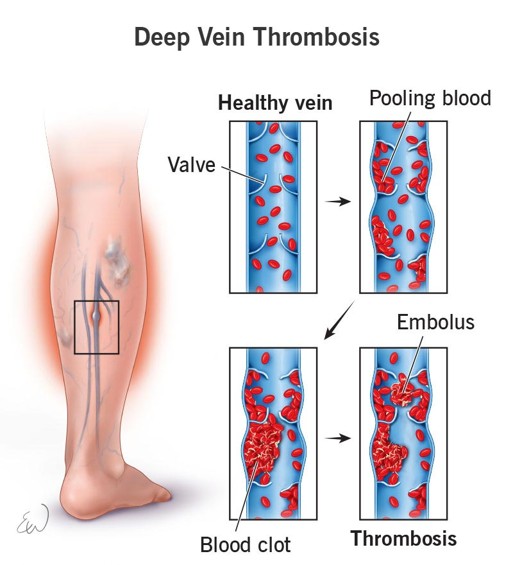
Deep Vein Thrombosis
Deep Vein Thrombosis is a condition in which a blood clot forms in a deep vein, usually in the legs. It can become life-threatening if the clot travels to the lungs, causing a pulmonary embolism.
Causes & Risk Factors of Deep Vein Thrombosis
- Prolonged immobility (long travel, bed rest)
- Surgery or hospitalization
- Injury to veins
- Pregnancy or hormonal therapy
- Obesity
- Smoking
- Cancer or clotting disorders
Complications of Deep Vein Thrombosis
- Pulmonary Embolism (PE) – serious medical emergency
- Post-thrombotic syndrome (chronic leg pain & swelling)
- Recurrent blood clots
Common Symptoms of Deep Vein Thrombosis
- Swelling in one leg, Leg pain or tenderness
- Warmth over affected area
- Red or discolored skin
- Visible surface veins
Diagnosis of Deep Vein Thrombosis
- Doppler ultrasound (primary test)
- D-dimer blood test
- CT or MR venography (if required)
- Clinical risk assessment
Treatment & Management of Deep Vein Thrombosis
- Anticoagulant medications (blood thinners)
- Compression stockings
- Thrombolytic therapy (severe cases)
- Inferior vena cava (IVC) filter (selected patients)
- Early mobilization
Prevention of Deep Vein Thrombosis
- Regular movement during long travel
- Hydration
- Post-surgery mobility exercises
- Use of compression devices in hospitals
- Risk assessment for high-risk patients
