Gastritis
What is Gastritis?
- Gastritis is inflammation of the stomach lining (mucosa).
- The stomach lining normally protects against acid, but irritation or damage can lead to inflammation.
- Acute gastritis – sudden onset, short-term
- Chronic gastritis – long-term, may persist for years
Causes of Gastritis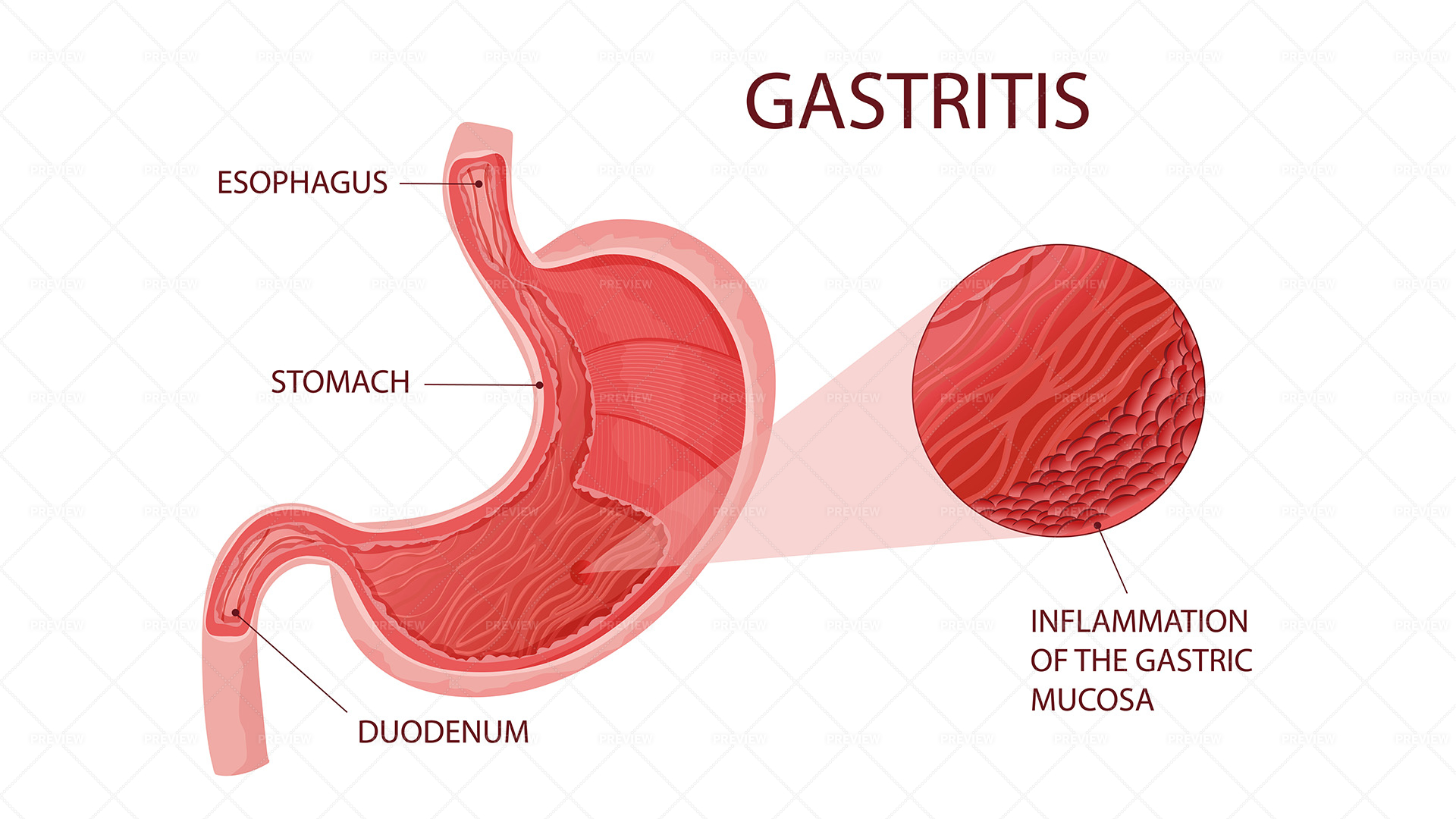
- Infections (especially H. pylori bacteria)
- Excess alcohol consumption
- Long-term NSAID use (e.g., aspirin, ibuprofen)
- Smoking and lifestyle factors
- Stress, injury, or major illness
- Autoimmune disorders (body attacks stomach lining)
Symptoms of Gastritis
- Upper abdominal pain or burning
- Nausea and vomiting
- Feeling of fullness or bloating
- Indigestion
- Blood in vomit or black stools (bleeding)
Types of Gastritis
- Acute Gastritis – sudden inflammation, often resolves quickly
- Chronic Gastritis – long-term inflammation, may lead to complications
- Erosive Gastritis – causes erosion, ulcers, or bleeding
Diagnosis of Gastritis
- Medical history and physical exam
- Endoscopy (to view stomach lining)
- Blood, stool, or breath tests for H. pylori
- Imaging (e.g., X-rays) if needed
Treatment of Gastritis
- Antacids or acid-reducing medications
- Antibiotics (if caused by H. pylori)
- Stopping irritants (alcohol, NSAIDs, smoking)
- Treating underlying conditions
Complications of Gastritis
- Peptic ulcers
- Bleeding in the stomach
- Increased risk of stomach cancer (chronic cases)
