Guillain–Barre Syndrome
What is Guillain–Barre Syndrome?
- Guillain–Barré Syndrome is a rare condition where the body’s immune system attacks the peripheral nerves.
- It affects nerve signaling, leading to weakness, numbness, or paralysis.
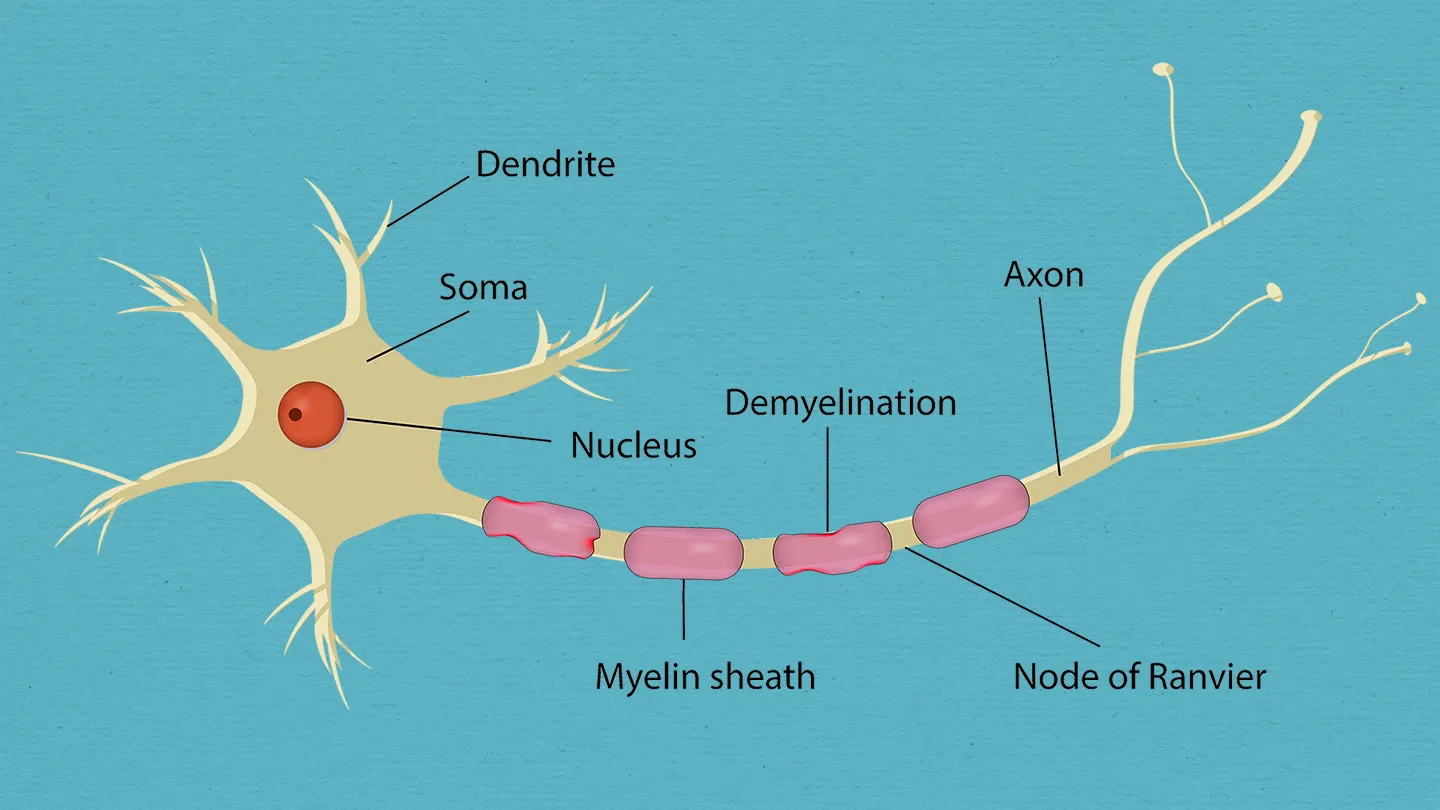
- The immune system damages the myelin sheath (protective covering of nerves).
- This disrupts communication between nerves and muscles, causing muscle weakness and loss of function.
- Common triggers include:
- Respiratory or gastrointestinal infections.
- Campylobacter bacterial infection.
- Viruses (e.g., influenza, Zika, COVID-19).
Symptoms of Guillain–Barre Syndrome
- Tingling (“pins and needles”) in hands and feet.
- Muscle weakness starting in legs and spreading upward.
- Difficulty walking or climbing stairs.
- Facial weakness, trouble speaking or swallowing.
- Severe nerve pain
- In severe cases Paralysis, Breathing difficulty (life-threatening).
Types of Guillain–Barre Syndrome
- AIDP (Acute Inflammatory Demyelinating Polyradiculoneuropathy) – most common form
- Miller Fisher Syndrome (MFS) – affects eyes and coordination
- AMAN / AMSAN – axonal variants affecting motor ± sensory nerves
Diagnosis of Guillain–Barre Syndrome
- Clinical evaluation (progressive weakness pattern)
- Nerve conduction studies
- Lumbar puncture (CSF analysis)
- Monitoring of respiratory function
Treatment of Guillain–Barre Syndrome
- No definitive cure, but treatments help recovery:
- Intravenous immunoglobulin (IVIG)
- Plasma exchange (plasmapheresis)
- Supportive care:
- Respiratory support
- Physical therapy
