Parkinson’s Disease
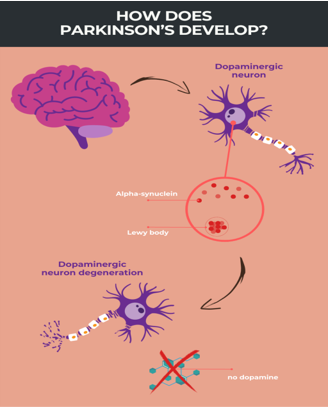
Parkinson’s Disease is a progressive neurological disorder that affects movement due to the loss of dopamine-producing neurons in the brain.
Key Causes & Risk Factors
- Age (commonly >60 years)
- Genetic predisposition
- Environmental exposure (toxins, pesticides)
- Loss of dopamine in the brain
Common Symptoms
- Tremors (shaking of hands)
- Bradykinesia (slowness of movement)
- Muscle rigidity (stiffness)
- Postural instability (balance issues)
- Speech and writing changes
Disease Progression
- Early Stage – Mild tremors, minimal functional impact
- Moderate Stage – Movement & daily tasks difficulties
- Advanced Stage – Severe disability, assistance required
Diagnosis
- Clinical neurological examination
- Medical history review
- Response to dopamine-based medications
- Imaging (MRI/DaT scan in some cases)
Treatment & Management
- Levodopa (dopamine replacement)
- Dopamine agonists
- Deep Brain Stimulation (DBS)
- Physical therapy, speech therapy, lifestyle support
