Ulcerative Colitis
What is Ulcerative Colitis?
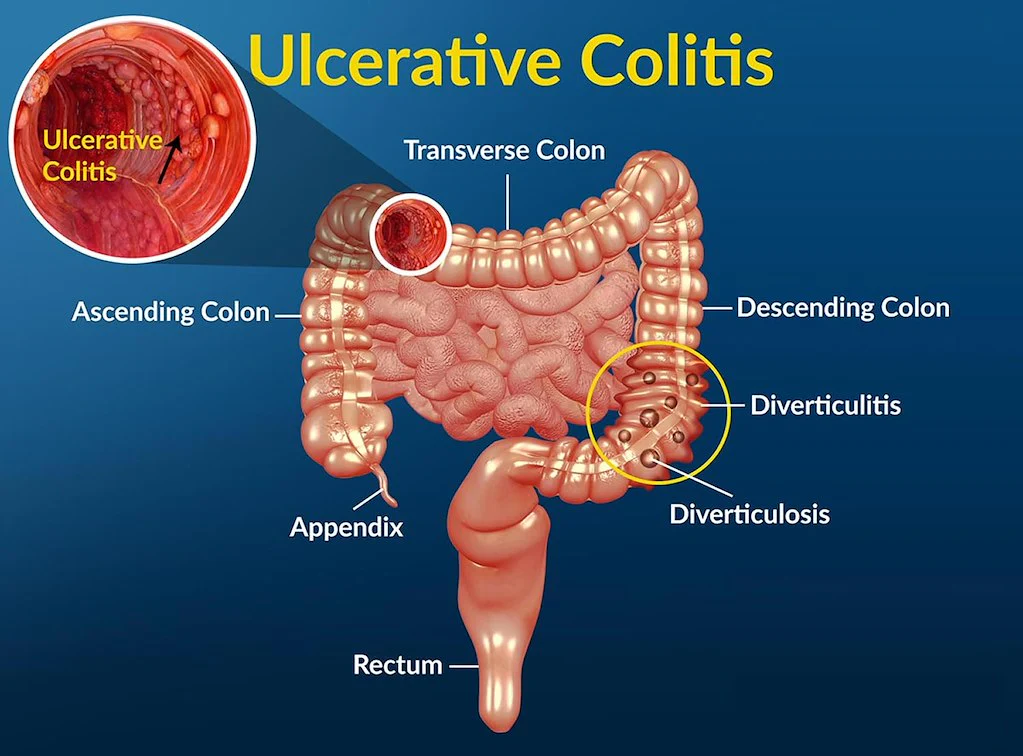
- Ulcerative Colitis (UC) is a chronic inflammatory bowel disease (IBD) that causes inflammation and ulcers in the colon (large intestine) and rectum.
- It usually starts in the rectum and may extend through part or all of the colon.
- It is a long-term condition with periods of flare-ups and remission.
- Caused by an abnormal immune response where the immune system attacks the intestinal lining. Leads to inflammation and ulcer formation in the colon.
- Results in symptoms like bleeding, diarrhea, and pain.
Symptoms of Ulcerative Colitis
- Diarrhea, often with blood or mucus
- Rectal bleeding
- Abdominal pain and cramping
- Urgency to pass stool (tenesmus)
- Fatigue, weight loss, fever
- In children: delayed growth
Types of Ulcerative Colitis
- Ulcerative proctitis – limited to rectum
- Left-sided colitis – extends to descending colon
- Pancolitis – involves entire colon
Complications of Ulcerative Colitis
- Severe bleeding and dehydration
- Anemia
- Colon cancer risk (long-term)
- Toxic megacolon (life-threatening colon swelling)
- Inflammation affecting skin, joints, and eyes
Diagnosis of Ulcerative Colitis
- Blood tests (anemia, inflammation)
- Stool tests (infection/inflammation markers)
- Colonoscopy with biopsy (gold standard)
- Imaging (CT/MRI) for complications
Treatment of Ulcerative Colitis
- Anti-inflammatory drugs (e.g., corticosteroids)
- Immunosuppressants
- Biologics (target immune response)
- Antidiarrheals, pain relief, iron supplements
