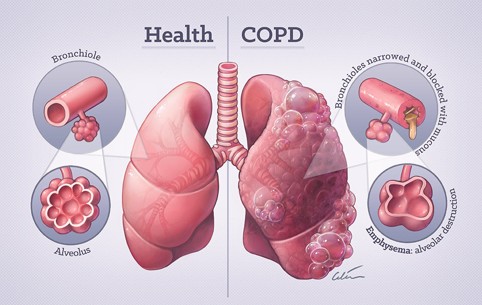
Chronic Obstructive Pulmonary Disease (COPD)
Chronic Obstructive Pulmonary Disease is a chronic inflammatory lung disease that causes airflow blockage and breathing difficulties. It is progressive and mainly associated with long-term exposure to harmful particles or gases.
Main Causes & Risk Factors of COPD
- Cigarette smoking (primary cause)
- Air pollution exposure
- Occupational dust & chemicals
- Biomass fuel smoke (indoor pollution)
- Genetic factors (Alpha-1 antitrypsin deficiency)
Common Symptoms of COPD
- Persistent cough
- Shortness of breath (especially during activity)
- Wheezing
- Chest tightness
- Excess mucus production
- Frequent respiratory infections
Types of COPD
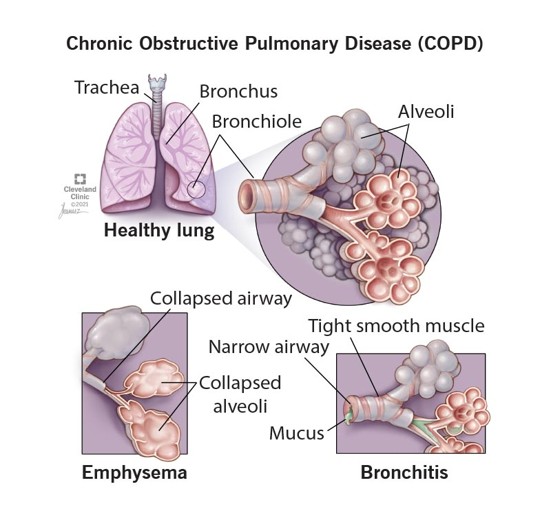
- Chronic Bronchitis – Long-term inflammation of airways with mucus production
- Emphysema – Damage to lung air sacs affecting oxygen exchange
Diagnosis of COPD
- Spirometry (lung function test)
- Chest X-ray or CT scan
- Oxygen saturation measurement
- Medical history & symptom assessment
Treatment & Management of COPD
- Bronchodilators (inhalers)
- Corticosteroids
- Oxygen therapy (advanced cases)
- Pulmonary rehabilitation
- Smoking cessation (most important step)
Prevention of COPD
- Avoid smoking & secondhand smoke
- Reduce exposure to air pollution
- Use protective equipment at workplaces
- Vaccinations (influenza, pneumonia)