Crohn’s Disease
What is Crohn’s Disease?
- Crohn’s disease is a type of Inflammatory Bowel Disease (IBD).
- It causes chronic inflammation of the digestive tract.
- Can affect any part of the gastrointestinal (GI) tract from mouth to anus.
- Most commonly affects the end of the small intestine and beginning of the colon.
- Inflammation may spread into deeper layers of the bowel wall.
- Disease usually occurs in cycles of flare-ups and remission.
- No permanent cure, but treatment helps control symptoms.
Symptoms of Crohn’s Disease
- Abdominal pain and cramping
- Weight loss and reduced appetite
- Fatigue, fever, Blood in stool
- Mouth sores
- Anal pain or drainage (fistula)
- Malnutrition
Causes of Crohn’s Disease
- Abnormal immune system response
- Genetic factors (family history)
- Gut bacteria and environmental triggers
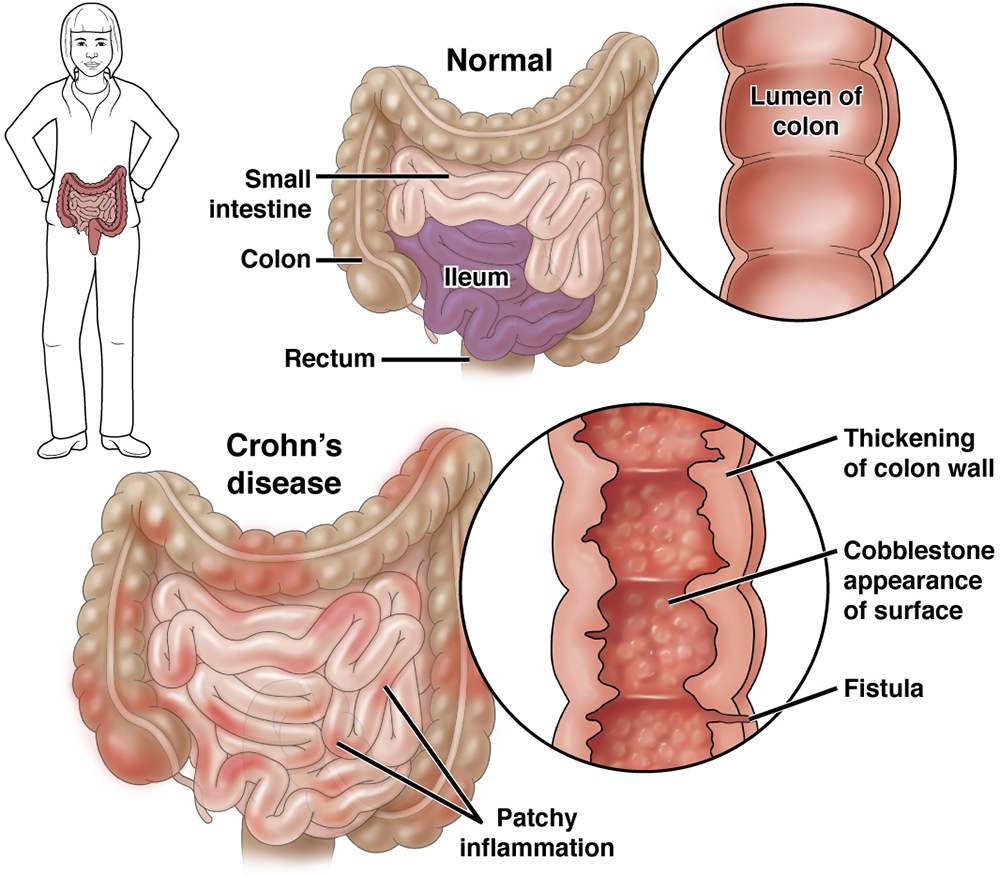
Types of Crohn’s Disease
- Ileocolitis – small intestine & colon
- Ileitis – small intestine only
- Crohn’s colitis – colon only
- Gastroduodenal Crohn’s – stomach & upper intestine
Diagnosis of Crohn’s Disease
- Medical history and symptom evaluation
- Blood and stool tests
- Colonoscopy or endoscopy
- Imaging tests (CT/MRI)
Complications of Crohn’s Disease
- Bowel obstruction due to thickened intestinal walls.
- Ulcers in the digestive tract.
- Fistulas abnormal connections between organs or skin.
- Anal fissures causing pain and bleeding.
- Abscesses collections of infection/pus.
- Malnutrition due to poor nutrient absorption.
Treatment of Crohn’s Disease
- Anti-inflammatory drugs
- Steroids
- Immune system suppressors
- Biologic therapies
- Antibiotics (when needed)
