Congenital Heart Disease
What is Congenital heart disease?
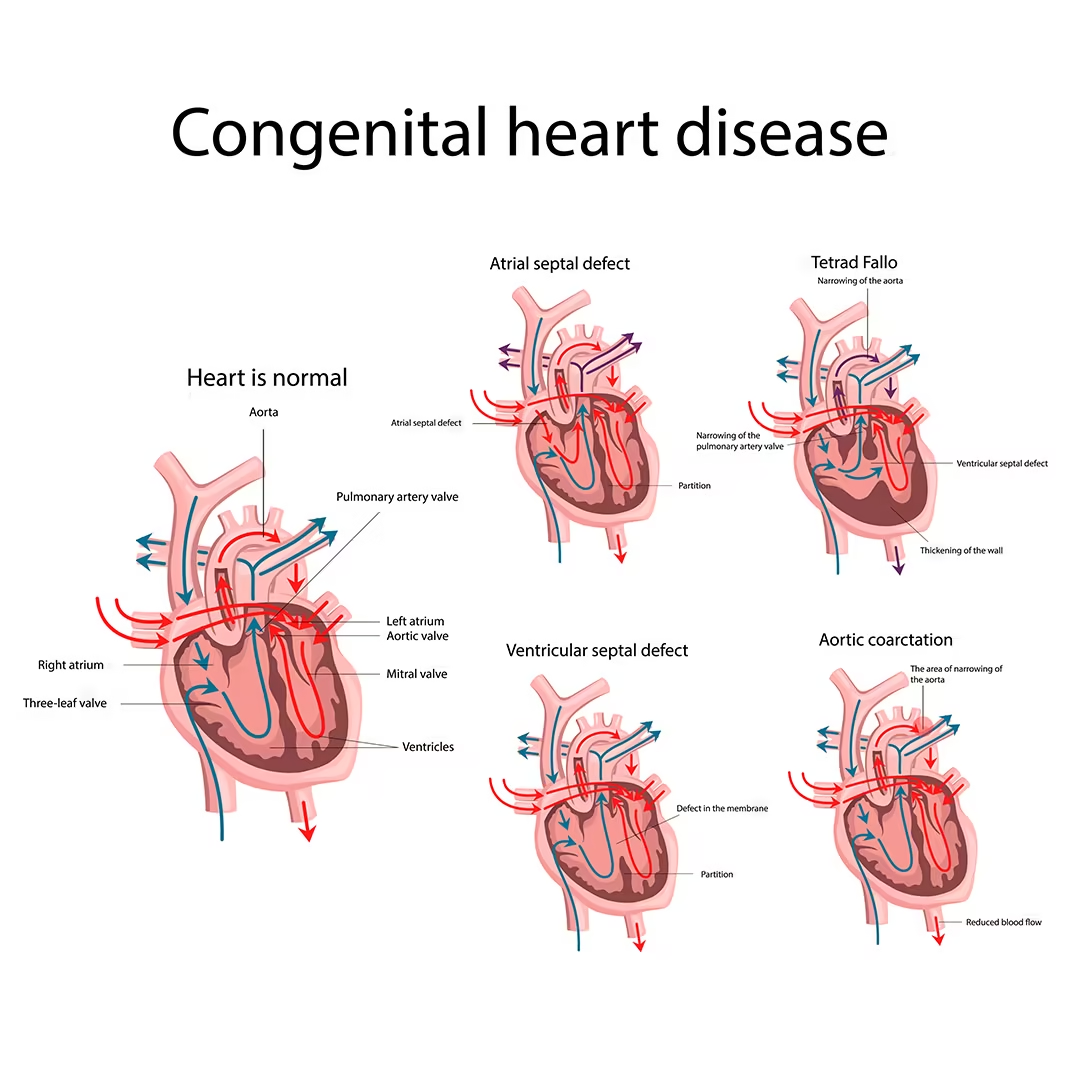
- Congenital heart disease is a structural problem of the heart present at birth that affects how blood flows through the heart.
- “Congenital” means the condition exists from birth.
- Caused by abnormal heart development during pregnancy.
- May involve heart chambers, valves, or blood vessels.
- Severity ranges from mild defects to life-threatening conditions.
Types of Congenital Heart Disease
- Ventricular Septal Defect (VSD) - hole between lower chambers
- Patent Ductus Arteriosus (PDA)
- Tetralogy of Fallot
- Coarctation of the Aorta
- Bicuspid Aortic Valve
- Transposition of Great Arteries
Symptoms of Congenital Heart Disease
- Shortness of breath
- Fatigue during activity
- Irregular heartbeat (arrhythmia)
- Swelling in legs or body (edema)
- Bluish skin or lips (low oxygen levels)
Diagnosis of Congenital Heart Disease
- Physical examination
- Electrocardiogram (ECG)
- Chest X-ray
- Echocardiography
- Cardiac imaging tests
Treatment of Congenital Heart Disease
- Monitoring
- Regular cardiology checkups for mild cases
- Medications
- Control heart rhythm
- Prevent blood clots
- Improve heart function
- Procedures & Surgery
- Catheter-based repair
- Heart surgery
- Implantable devices (pacemaker or ICD)
