Cystic Fibrosis
What is Cystic Fibrosis?
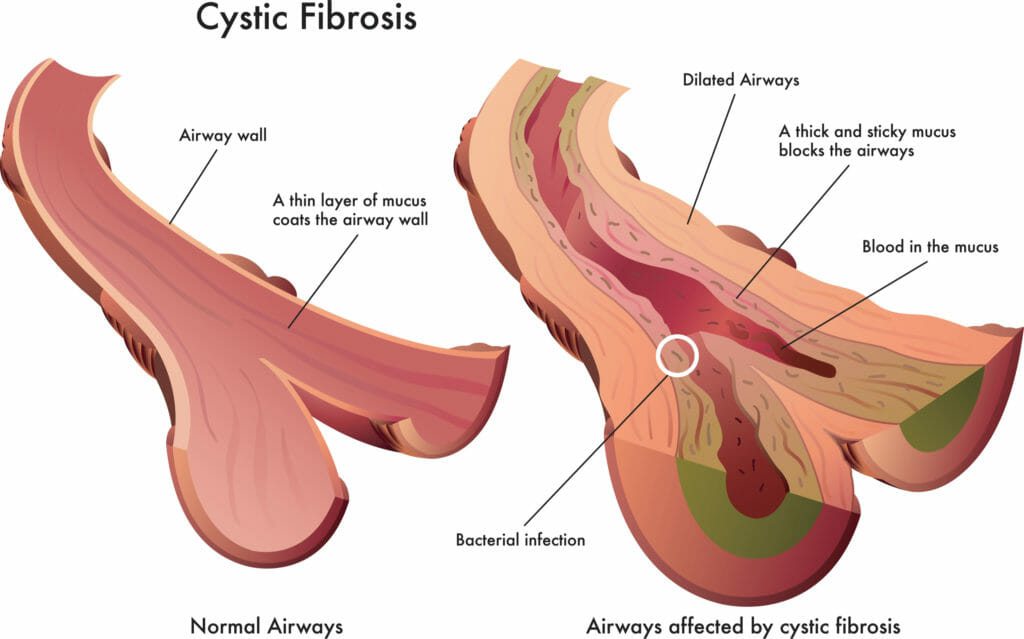
- Cystic Fibrosis is a genetic (inherited) disorder that affects the lungs, digestive system, and other organs by causing thick, sticky mucus buildup.
- Caused by mutation in the CFTR gene.
- Passed from parents to children (autosomal recessive inheritance).
- Affects cells that produce mucus, sweat, and digestive juices.
- Thick mucus blocks airways and digestive ducts.
Symptoms of Cystic Fibrosis
- Respiratory Symptoms
- Persistent cough with thick mucus
- Wheezing and shortness of breath
- Frequent lung infections
- Recurrent sinus infections
- Recurrent sinus infections
- Persistent cough with thick mucus
- Digestive Symptoms
- Poor weight gain and growth
- Greasy, foul-smelling stools
- Severe constipation or intestinal blockage
Diagnosis of Cystic Fibrosis
- Newborn screening tests
- Sweat chloride test (high salt levels)
- Genetic testing
- Clinical evaluation and family history
Treatment of Cystic Fibrosis
- Airway clearance therapy
- Antibiotics for infections
- Mucus-thinning medications
- Anti-inflammatory drugs
- CFTR modulator therapy (targets gene defect)
- Pancreatic enzyme supplements & nutritional support
Complications of Cystic Fibrosis
- Chronic lung infections
- Bronchiectasis (airway damage)
- Collapsed lung (pneumothorax)
- Respiratory failure
- Diabetes related to CFLiver disease
