Iron Deficiency Anemia
What is Iron Deficiency Anemia?
- Iron Deficiency Anemia is a condition where the body lacks enough iron to produce adequate hemoglobin in red blood cells.
- Hemoglobin is essential for carrying oxygen to body tissues.
- It is the most common type of anemia worldwide.
- Low iron → decreased hemoglobin production
- Reduced oxygen delivery → fatigue and weakness
- Results in small, pale red blood cells (microcytic anemia)
Causes of Iron Deficiency Anemia
- Blood loss (most common):
- Heavy menstruation
- Internal bleeding (ulcers, cancers)
- Low dietary iron intake (poor nutrition)
- Poor iron absorption (e.g., celiac disease, intestinal surgery)
- Increased demand:
- Pregnancy
- Growth in children
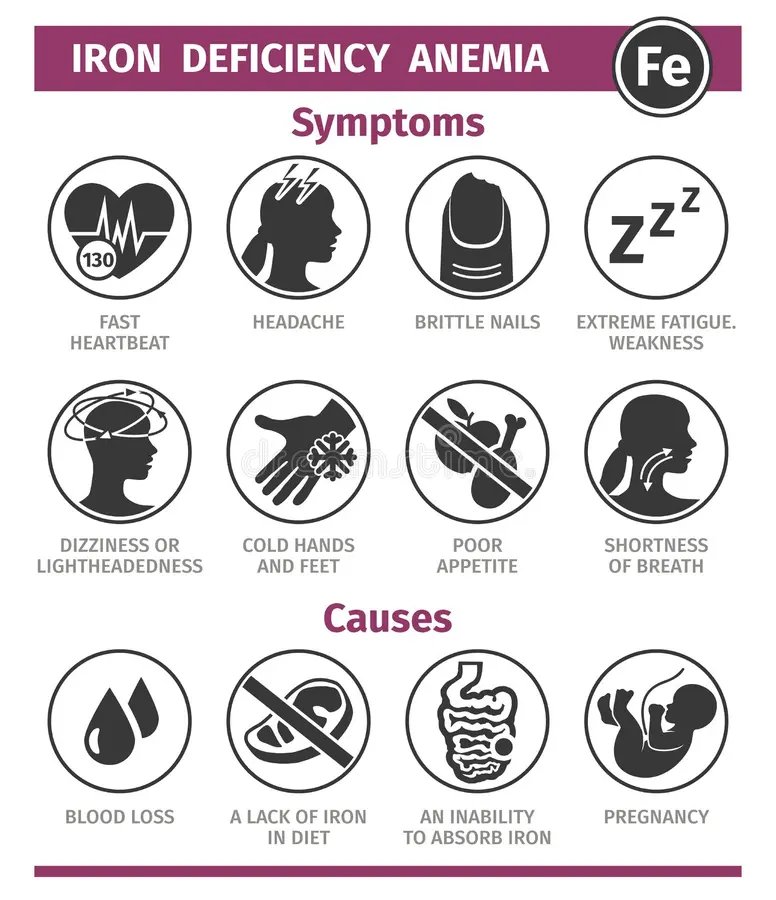
Symptoms of Iron Deficiency Anemia
- Extreme fatigue and weakness
- Pale skin
- Shortness of breath
- Dizziness or headaches
- Cold hands and feet
- Brittle nails
- Unusual cravings (e.g., ice, dirt – pica)
Diagnosis of Iron Deficiency Anemia
- Blood tests:
- Hemoglobin
- Serum ferritin (iron stores)
- Iron levels and transferrin saturation
- Identify underlying cause (e.g., bleeding source)
Treatment of Iron Deficiency Anemia
- Iron supplements (oral or IV)
- Dietary changes (iron-rich foods)
- Treat underlying cause (e.g., bleeding)
- Vitamin C intake to improve absorption
