Sepsis
What is Sepsis?
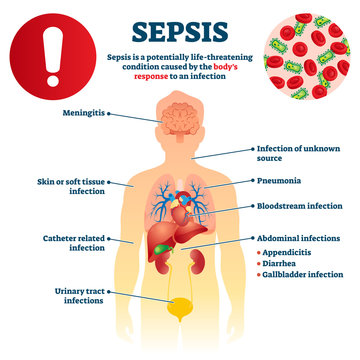
- Sepsis is a life-threatening medical emergency caused by the body’s extreme response to an infection, leading to widespread inflammation and organ dysfunction.
- Occurs when infection triggers an uncontrolled immune reaction.
- Can rapidly cause tissue damage, organ failure, and death.
- Requires immediate medical treatment.
Symptoms of Sepsis
- Confusion or disorientation
- Shortness of breath
- Severe pain or discomfort
- Reduced urine output
- Rapid heart rate
Diagnosis of Sepsis
- Physical examination and vital signs
- Blood tests and cultures
- Organ function tests
- Identification of infection source
Complications of Sepsis
- Organ failure (kidneys, lungs, heart, brain)
- Abnormal blood clotting
- Septic shock
Treatment of Sepsis
- Immediate antibiotics
- Intravenous (IV) fluids
- Oxygen therapy
- Blood pressure support medications
- Surgery (if infected tissue removal needed)
