Whooping Cough
What is Whooping Cough?
- Whooping cough (pertussis) is a highly contagious respiratory infection caused by bacteria (Bordetella pertussis).
- It is characterized by severe coughing fits followed by a “whoop” sound when breathing in.
- It mainly affects infants and unvaccinated individuals, but can occur at any age.
- Bacteria attach to the respiratory tract lining and release toxins.
- These toxins damage airway structures and cause inflammation and mucus buildup, leading to intense coughing.
- Caused by Bordetella pertussis bacteria.
- Spreads through airborne droplets when an infected person coughs or sneezes.
- Highly contagious, especially in close-contact settings.
Symptoms of Whooping Cough
- Persistent severe cough
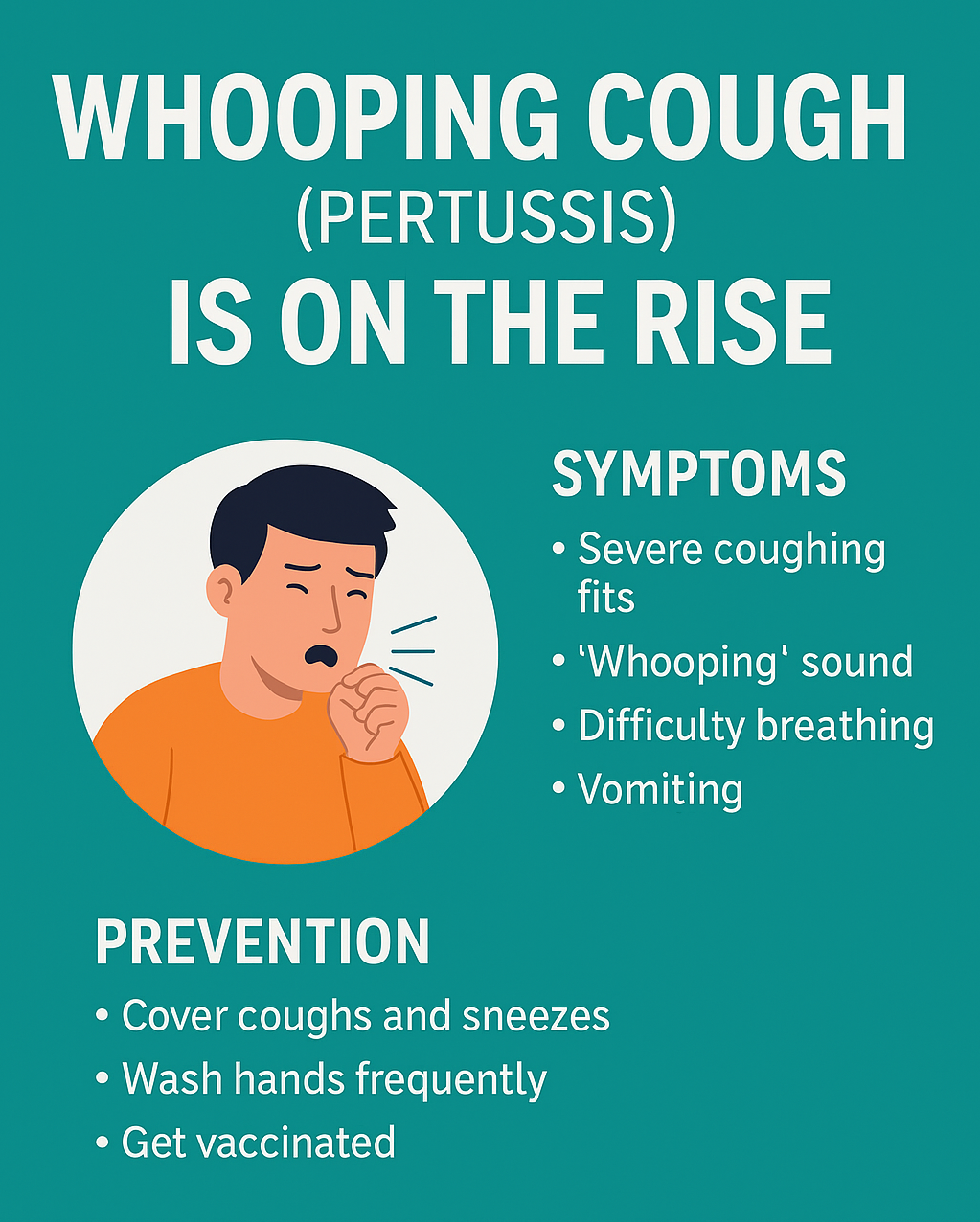
- Whooping sound after coughing
- Vomiting after coughing
- Fatigue
- In infants: Breathing difficulty or apnea (no breathing episodes)
Stages of Disease Whooping Cough
- Early Stage (Catarrhal Phase)
- Runny nose
- Mild fever
- Mild cough (resembles common cold)
- Paroxysmal Stage
- Severe, uncontrollable coughing fits
- “Whoop” sound while inhaling
- Vomiting, fatigue, red/blue face
- Recovery Stage
- Gradual reduction in coughing
- Cough may persist for weeks (“100-day cough”)
Diagnosis of Whooping Cough
- Clinical symptoms (prolonged cough pattern)
- Laboratory tests (nasal/throat swab)
- Early diagnosis is important for control of spread
Treatment of Whooping Cough
- Antibiotics (most effective if started early)
- Supportive care: Hydration, Oxygen support (if severe)
- Hospitalization for infants or severe cases
