Wilson’s Disease
What is Wilson’s Disease?
- Wilson’s Disease is a rare inherited genetic disorder that causes excessive copper buildup in the body, especially in the liver, brain, and eyes.
- Normally, excess copper is removed by the liver, but in this condition, it accumulates and damages organs.
- Symptoms usually appear between ages 5–40, though the disease is present from birth.
- Mutation in the ATP7B gene impairs copper transport and excretion.
- Copper builds up in:
- Liver → liver damage
- Brain → neurological symptoms
- Eyes → characteristic changes
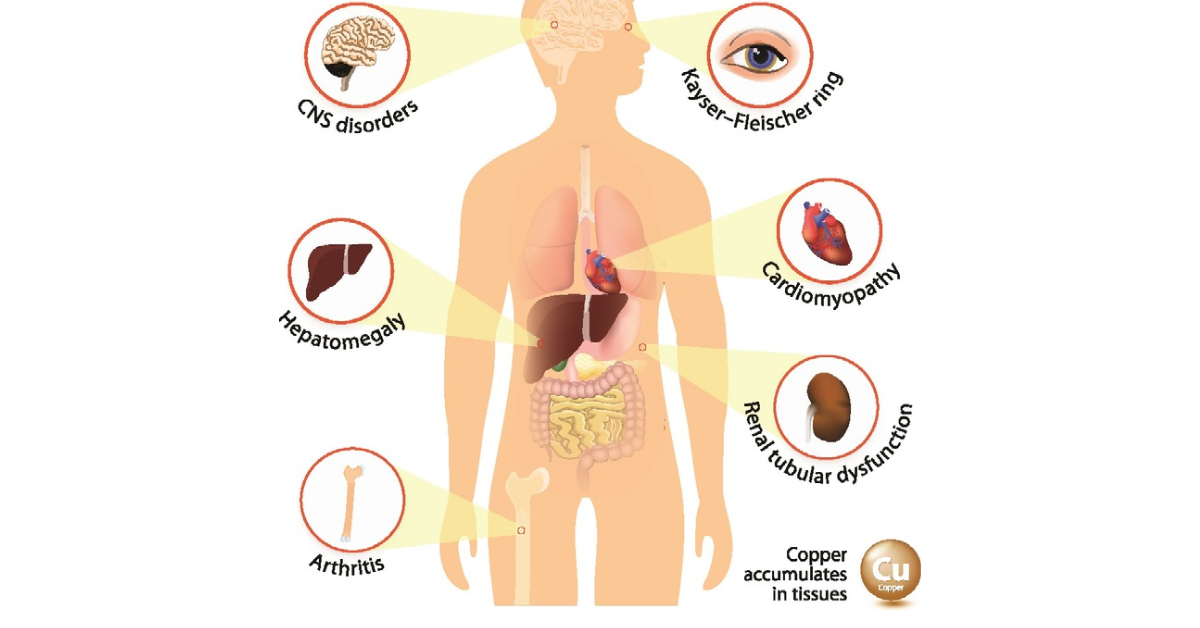
- Excess copper leads to cell damage and organ dysfunction.
Diagnosis of Wilson’s Disease
- Blood and urine tests (copper levels)
- Eye examination (Kayser–Fleischer rings)
- Liver biopsy
- Genetic testing
Symptoms of Wilson’s Disease
- Liver-related
- Jaundice (yellowing of skin/eyes)
- Fatigue, loss of appetite
- Abdominal swelling
- Liver failure (advanced cases)
- Neurological
- Tremors
- Difficulty speaking, swallowing, or coordination
- Muscle stiffness or uncontrolled movements
- Psychiatric
- Mood changes, depression
- Personality changes
- Behavioral disturbances
- Eye signs (Characteristic)
- Kayser–Fleischer rings (brownish rings around cornea)
Complications of Wilson’s Disease
- Liver cirrhosis and liver failure
- Permanent neurological damage
- Kidney problems (e.g., kidney stones)
- Psychiatric disorders
- Can be fatal if untreated
Treatment of Wilson’s Disease
- Copper-chelating agents (remove excess copper)
- Zinc therapy (prevents copper absorption)
- Dietary copper restriction
- Liver transplant in severe cases
