Addison’s Disease
What is Addison’s disease?
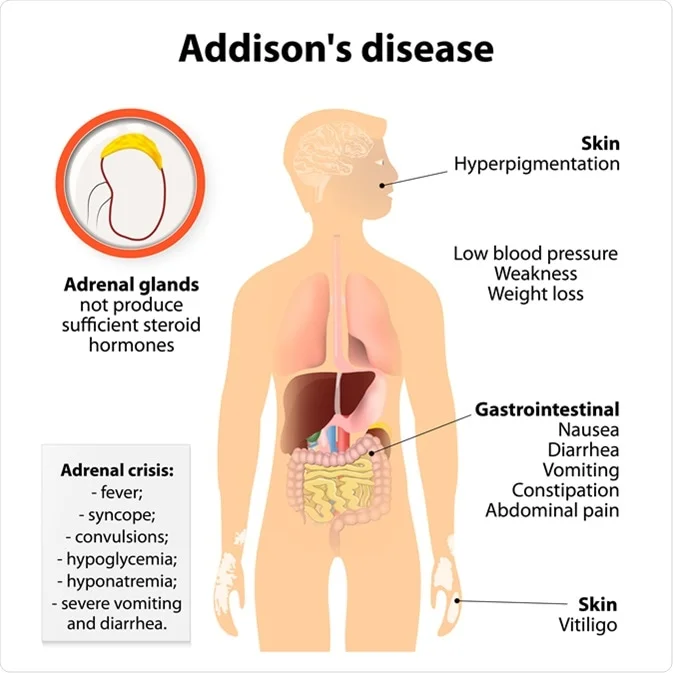
- Addison’s disease is a rare hormonal disorder, also called primary adrenal insufficiency.
- Occurs when the adrenal glands do not produce enough hormones, mainly: Cortisol, Aldosterone.
- Symptoms usually develop slowly over time.
- Without treatment, the condition can become life-threatening.
Symptoms of Addison’s Disease
- Extreme fatigue
- Muscle weakness
- Weight loss
- Loss of appetite
- Salt cravings
- Dizziness or low blood pressure
- Nausea, vomiting, or abdominal pain
Causes of Addison’s Disease
- Autoimmune disease (immune system attacks adrenal glands)
- Tuberculosis or infections
- Cancer spread to adrenal glands
- Bleeding into adrenal glands
- Genetic disorders
- Certain medications affecting hormone production
Complications of Addison’s Disease
- Adrenal crisis (life-threatening)
- Severe dehydration
- Low blood pressure
- Low blood sugar
- Electrolyte imbalance
Diagnosis of Addison’s Disease
- Blood tests (cortisol levels)
- ACTH stimulation test
- Electrolyte testing
- Imaging scans (CT or MRI)
Treatment of Addison’s Disease
- Hormone Replacement Therapy
- Corticosteroid medicines to replace cortisol
- Mineralocorticoid medicines to replace aldosterone
- Lifestyle Management
- Regular medication use (lifelong)
- Adjust medicine during illness or stress
- Maintain proper salt intake (if advised)
- Regular medical follow-up
