Amyotrophic Lateral Sclerosis (ALS)
Amyotrophic Lateral Sclerosis is a progressive neurodegenerative disorder that affects motor neurons - the nerve cells responsible for controlling voluntary muscle movement. Over time, muscles weaken and lose function.
Causes & Risk Factors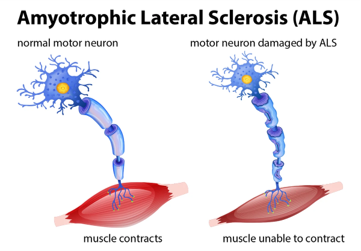
- Degeneration of motor neurons in brain & spinal cord
- Genetic mutations (familial ALS in some cases)
- Increasing age (commonly 40–70 years)
- Environmental and lifestyle factors (under study)
Common Symptoms
- Muscle weakness (arms, legs, or speech muscles)
- Muscle twitching (fasciculations)
- Difficulty speaking or swallowing
- Muscle cramps and stiffness
- Progressive paralysis
Disease Progression
- Early Stage – Mild muscle weakness or coordination issues
- Middle Stage – Difficulty walking, speaking, swallowing
- Advanced Stage – Severe muscle paralysis and breathing difficulty
Diagnosis
- Neurological examination
- Electromyography (EMG)
- Nerve conduction studies
- MRI to rule out other conditions
- Clinical symptom progression assessment
Treatment & Management
- Disease-modifying medications: Riluzole, Edaravone
- Respiratory support (ventilation assistance)
- Physical and speech therapy
- Nutritional support
- Multidisciplinary care approach
