Arrhythmia
What is Arrhythmia?
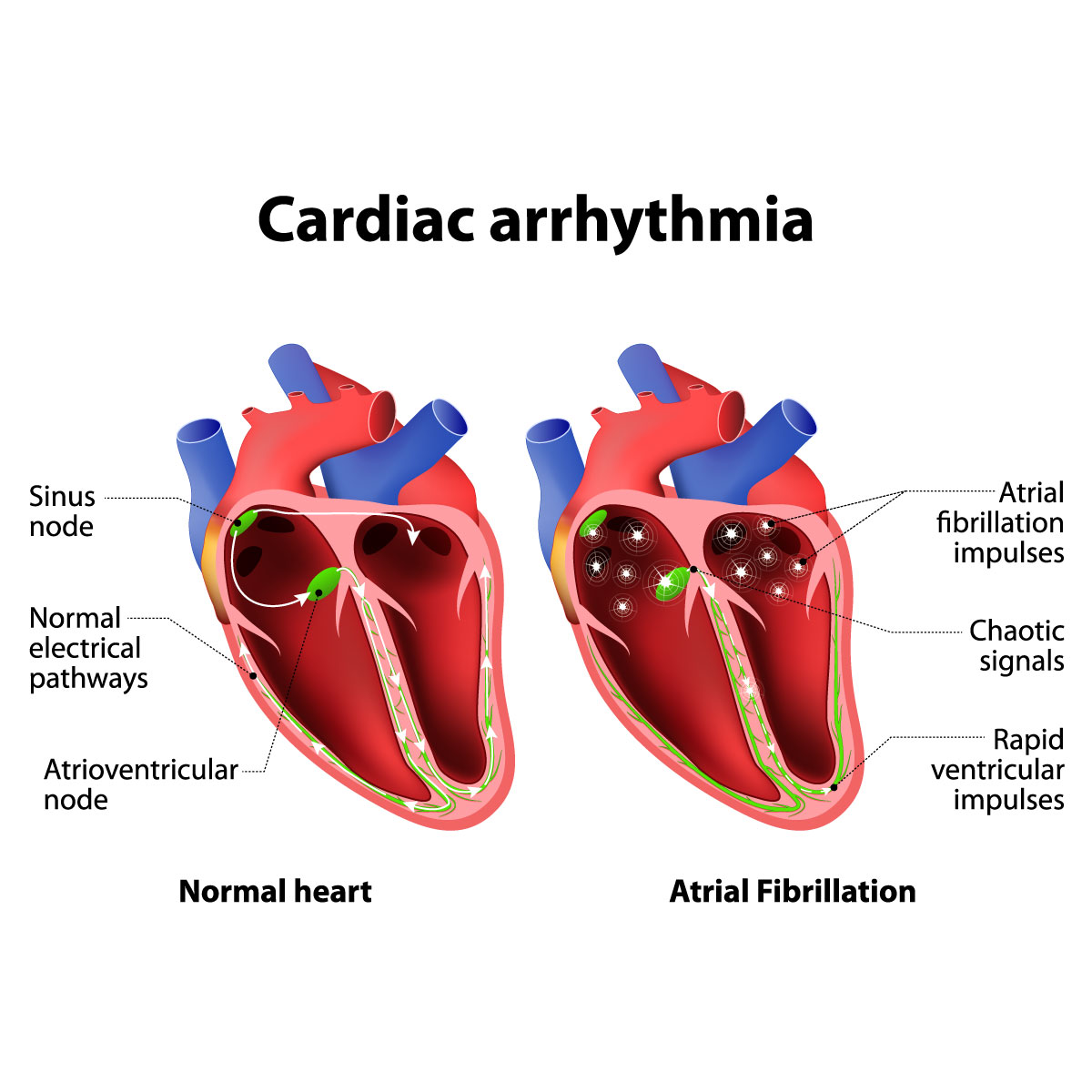
- Arrhythmia is a condition in which the heart beats irregularly - too fast, too slow, or unevenly.
- It happens when the electrical signals that control the heartbeat do not work properly.
Types of Arrhythmia
- Tachycardia – fast heartbeat (>100 bpm)
- Bradycardia – slow heartbeat (<60 bpm)
- Atrial fibrillation (AFib) – irregular and rapid rhythm
- Premature beats – extra early heartbeats
- Ventricular arrhythmias – serious rhythm problems from lower chambers
Symptoms of Arrhythmia
- Palpitations (fluttering or racing heart)
- Chest discomfort
- Shortness of breath
- Dizziness or light headedness
- Fatigue
- Fainting
Causes of Arrhythmia
- Heart disease or heart attack
- High blood pressure
- Coronary artery disease
- Electrolyte imbalance (potassium/sodium)
- Stress or anxiety
- Smoking or excess caffeine
- Alcohol or drug use
- Thyroid disorders
Complications of Arrhythmia
- Stroke (especially in atrial fibrillation)
- Heart failure
- Blood clots
- Cardiac arrest
- Sudden cardiac death (severe cases)
Diagnosis of Arrhythmia
- ECG (Electrocardiogram)
- Holter monitor
- Echocardiogram
- Stress test
- Blood tests
Treatment of Arrhythmia
- Medications
- Anti-arrhythmic drugs
- Beta-blockers
- Calcium channel blockers
- Blood thinners (to prevent stroke)
- Medical Procedures
- Cardioversion – restores normal rhythm
- Catheter ablation – destroys abnormal electrical pathways
- Pacemaker – treats slow heart rate
- Implantable cardioverter-defibrillator (ICD) – prevents sudden death
