Atherosclerosis
What is Atherosclerosis?
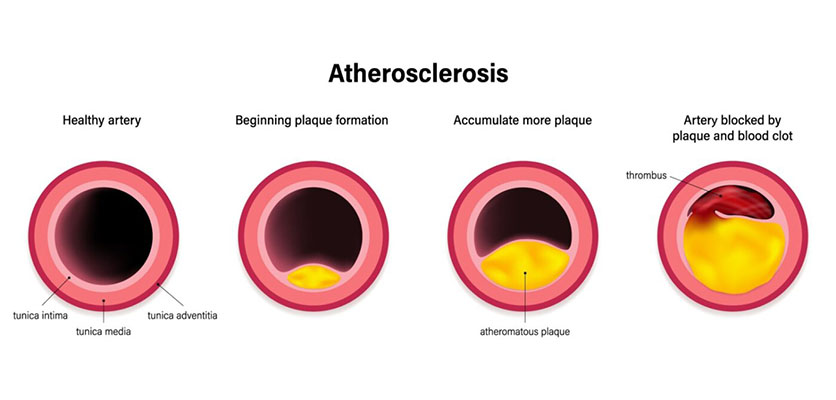
- Atherosclerosis is a condition in which fat, cholesterol, and other substances (plaque) build up inside the arteries.
- This causes arteries to narrow and harden, reducing blood flow to organs and tissues.
- Arteries normally carry oxygen-rich blood throughout the body.
- Plaque buildup blocks or slows blood flow.
- Can affect heart, brain, kidneys, and legs.
- Often develops slowly over many years.
- Symptoms may appear only after severe blockage.
Causes of Atherosclerosis
- Atherosclerosis begins when the inner artery wall is damaged.
- High cholesterol, Blood Pressure
- Diabetes
- Lack of physical activity
Symptoms of Atherosclerosis
- Heart arteries
- Chest pain (angina)
- Shortness of breath
- Brain arteries
- Weakness or numbness
- Trouble speaking
- Vision problems
- Legs (Peripheral artery disease)
- Leg pain while walking
- Kidney arteries
- High blood pressure
- Kidney problems
Complications of Atherosclerosis
- Heart attack
- Stroke
- Peripheral artery disease
- Chronic kidney disease
- Heart failure
Treatment of Atherosclerosis
- Medications
- Cholesterol-lowering drugs (statins)
- Blood pressure medicines
- Antiplatelet drugs (prevent clots)
- Lifestyle Changes
- Healthy diet (low fat & cholesterol)
- Regular exercise
- Weight control
- Stop smoking
- Control blood pressure & sugar
- Procedures (Severe cases)
- Angioplasty & stent
- Bypass surgery
