Wilms Tumor (Nephroblastoma)
- Wilms tumor is the most common kidney cancer in children.
- It develops from immature kidney cells and typically occurs in children under 5 years of age.
- Usually affects one kidney, but both kidneys may be involved in some cases.
- The tumor grows rapidly but is often highly treatable when diagnosed early.
- It is also known as nephroblastoma.
Types of Wilms Tumor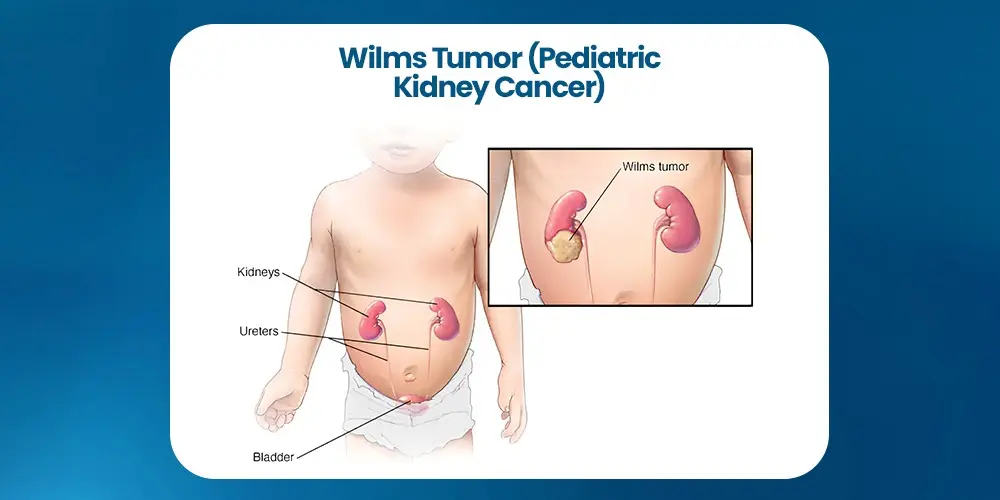
- Favorable Histology Wilms Tumor: Most common type with better treatment outcomes.
- Anaplastic Wilms Tumor: Contains abnormal cancer cells and is more aggressive.
- Unilateral Wilms Tumor: Affects one kidney.
Symptoms of Wilms Tumor
- Abdominal swelling or mass
- Abdominal pain
- Blood in urine (hematuria)
- Fever Loss of appetite
- Nausea and vomiting
- High blood pressure
- Fatigue Shortness of breath (in advanced disease)
Complications of Wilms Tumor
- Tumor rupture
- Spread to lungs, liver, or lymph nodes
- Kidney dysfunction
- Hypertension
- Treatment-related side effects
- Recurrence after treatment
Stages of Wilms Tumor
- Stage I: Tumor confined to the kidney and completely removed
- Stage II: Tumor extends beyond the kidney but is completely removed
- Stage III: Residual tumor remains in the abdomen or regional lymph nodes involved
- Stage IV: Spread to distant organs (e.g., lungs, liver, bones)
- Stage V: Tumors present in both kidneys at diagnosis
Diagnosis of Wilms Tumor
- Abdominal ultrasound
- CT scan or MRI
- Blood and urine tests
- Chest X-ray or CT scan to assess lung involvement
- Biopsy (selected cases)
Treatment of Wilms Tumor
- Surgery
- Primary treatment for most patients
- Radical nephrectomy (removal of the affected kidney and surrounding tissues)
- Kidney-sparing surgery may be considered in bilateral disease
- Chemotherapy
- Used before and/or after surgery
- Common agents include:
- Vincristine
- Dactinomycin
- Doxorubicin
- Radiation Therapy
- Used for advanced-stage disease
- Recommended when residual tumor remains after surgery or in metastatic disease
- Management of Bilateral Wilms Tumor
- Preoperative chemotherapy to shrink tumors
- Nephron-sparing surgery when possible to preserve kidney function
